.svg)


Software Modernization Services
From legacy to future-ready: with AI-augmented engineering accelerating every step, without disrupting what already works.
Speak with our expertSoftware modernization strategies for improved business agility
All applications go through a lifecycle - modernization is a journey, not a destination. A system that may not be considered legacy now may become outdated next year due to the pace of technological change, shifting skillset availability and cost, and changing business needs.
At Merixstudio, we help companies transform how their organizations work through legacy software modernization services. We help businesses transform outdated systems into scalable, high-performance applications without disrupting day-to-day operations. Whether you're facing rising maintenance costs, a shrinking talent pool for aging tech, or a need to integrate modern SaaS solutions, our software modernization services provide a clear, risk-controlled path forward.
Partner with us to evolve your applications and meet the expectations of your users.
Enhance efficiency
Streamline customer-facing processes to boost efficiency and reduce costs.
Tailor modernization plan
Create the perfect modernization scenario with our unique user-centric software modernization process.
Improve user experience & performance
Transform the experiences of your users and software performance with our cross-functional modernization team.
Ensure seamless integration
Connect your existing software seamlessly with SaaS platforms and other systems.
Minimize risk and cost
Utilize cloud technology to reduce risks and operational expenses.
Accelerate feature release
Speed up the deployment of new features, shifting from months to weeks.
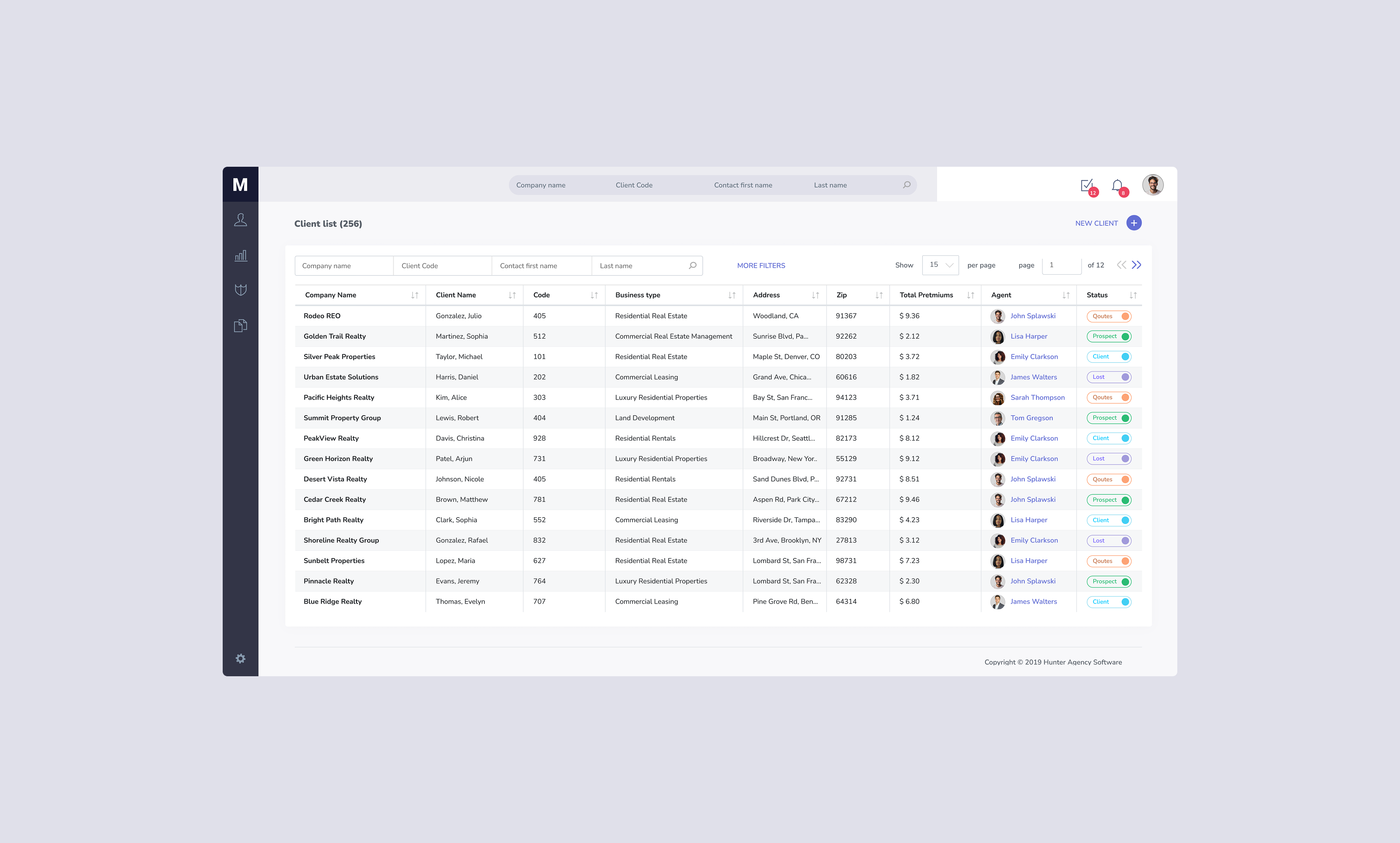
Insurance system modernization
Translating complex insurance issues and challenges into a highly usable yet advanced platform that accelerates core business processes.


Merixstudio was able to grasp the industry as a whole, as well as its nuances, and then add value. What’s more, they made me understand my application better than I have in the past 12 years of using it.
Modernization strategies
aligned with your goals
and expectations
Businesses are different, and so are modernization strategies. One approach does not suit all. Learn more about our three methods for dealing with outdated software.

Lifting a portion of an entire existing application from your on-premise infrastructure and shifting it to the cloud with few or no modifications to the code.
Good, if you:
- want to start with moving to the cloud
- need minimal disruption to the application
- can't change the application's architecture
What you get:
- fastest modernization at lowest cost
- no major changes = no unexpected costs
- new horizon of leveraging cloud services

Making major changes to your application's code or configuration to move it to the cloud without impacting its external behavior; the architecture of the existing application remains unchanged.
Good, if you:
- want to add features, improve performance, or scale the application, but it can't be done in the application's existing state
- need to make important code changes to enable migration to the cloud
What you get:
- reduced cost of future maintenance
- good benefit-cost ratio fostering growth
- stability and flexibility ensured by cloud solutions

Rebuilding your application from the ground up by creating new functionalities to replace and retire existing applications; includes updating the application architecture for a fully modern stack.
Good, if you:
- use an application that is too old and outdated to spend any more time and money maintaining it
- get more value from rebuilding an outdated application than sustaining it
What you get:
- solution fully tailored to your needs
- future-proof design created with maintenance in mind
- stability and flexibility ensured by cloud solutions
See how we can
modernize your software


Project discovery


Current state
Analyzing your system from the user perspective including available data analysis, observations and interviews with users
Examining your system from the technical side, including architecture, critical areas of the solution and the technology used for its implementation
Future vision
Modernization roadmap

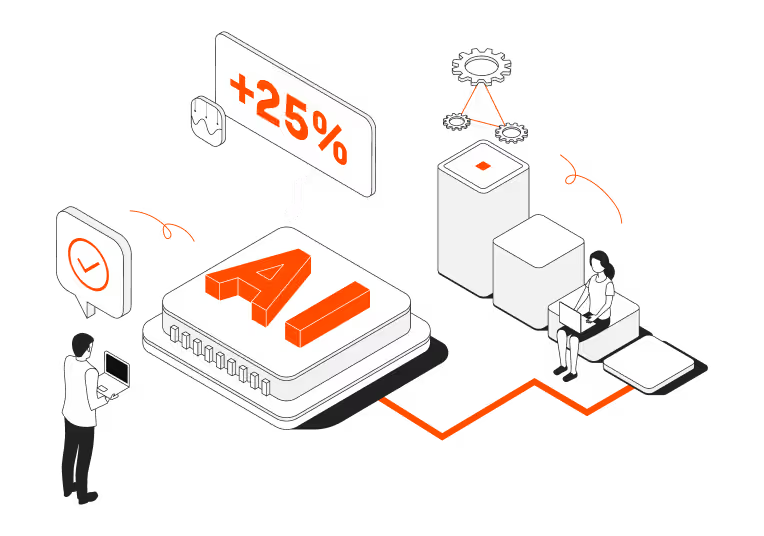
AI-augmented delivery with measurable impact
Our teams use AI across day-to-day delivery workflows, from coding and testing to analysis and documentation.
We track its impact through DORA metrics, and on selected tasks it can accelerate delivery by up to 25%.
Expert advice for informed strategies



Stop working around your software. Make it work for you.
Frequently asked questions
Software modernization is the process of transforming outdated applications into systems that meet current business, technical, and user requirements. It can involve migrating to the cloud, refactoring legacy code, replacing end-of-life technologies, adopting modern architectures, or redesigning interfaces that no longer serve users well. It makes sense when your system becomes too costly to maintain, too slow to evolve, or when technical debt starts blocking product development. Software modernization isn't always a rewrite - often it's a series of targeted improvements guided by a clear strategy and prioritized by business impact. The terms software modernization and application modernization are often used interchangeably - both refer to the process of bringing outdated systems in line with current business, technical, and user requirements.
In practice, these terms refer to the same process - updating systems that no longer meet current needs. "Legacy software modernization" tends to emphasize the age and technical debt of the existing system, while "application modernization" is broader and can include systems that aren't technically legacy but need architectural, performance, or UX improvements to support business growth. Regardless of terminology, the goal is the same: reducing maintenance costs, improving scalability, enabling faster feature releases, and making the product more usable. What matters is the modernization strategy, not the label.
We work with three core application modernization strategies, matched to your product's condition and business goals. Choosing the right software modernization strategy - or combining approaches - depends on technical and business assessment, not preference. Lift & shift moves your application to the cloud with minimal code changes - fast, low-risk, and a good starting point for further evolution. Augment & refactor makes targeted changes to code or architecture to improve performance, scalability, or cloud readiness without disrupting the product's external behavior. Complete rewrite rebuilds the application from the ground up when sustaining the existing system costs more than replacing it.
Software modernization starts from an existing system - its users, data, workflows, and business logic are already in place. The challenge is to improve what exists without losing what works. A new build starts from zero, which gives more architectural freedom but also means rebuilding everything: domain knowledge, integrations, data migration, user adoption. Custom software modernization reduces risk by working incrementally - you keep the business running while improving the product underneath. That's the core value of software modernization services - evolution, not revolution. In many cases, modernization delivers more value faster and at lower cost than a full rebuild.
Our process has four phases. It starts with Project Discovery, where we map your business processes and understand your modernization goals. Next, we assess the Current State through two parallel tracks: a UX assessment (analyzing the system from the user's perspective) and a technical assessment (examining architecture, codebase, and infrastructure). Then we move to Future Vision - workshop sessions that combine user needs, business needs, and technical findings to shape a concept for the new solution. Finally, we deliver a detailed Modernization Roadmap with priorities, cost estimates, and a concrete plan for the first implementation phase.This structured approach means we don't start coding until we know exactly what matters most.
To assess the current state of your system accurately, we need your active involvement. Any existing documentation - architecture diagrams, integration maps, infrastructure details - is helpful. If you have developers or technical leads on your team, connecting us with them accelerates discovery significantly. We'll also need read-only access to the codebase, the running application, and the infrastructure. The more context we have upfront, the more precise and actionable the modernization roadmap will be.
Yes, and we have extensive experience working in team augmentation models alongside client developers. During the Future Vision and Modernization Roadmap phases, we define how both teams will collaborate - including responsibilities, communication patterns, and handoff points. Whether your developers handle specific modules while we take on others, or we work together in a blended team, we adapt the collaboration model to your setup and capacity.
Estimating a modernization project requires understanding both what you want to achieve and what's technically feasible given your current system. That's why we always start with a structured assessment phase - including technology audit, UX audit, and domain analysis - before committing to numbers. During this pre-development stage, we work closely with your domain experts to map the full scope: what needs to change, what can stay, what's most urgent. Based on these findings, we prepare a modernization scenario with cost and timeline estimates broken into phases, so you can plan investment incrementally rather than committing to a single large budget upfront.
The timeline depends on the scope and strategy. A lift-and-shift cloud migration can take as little as 2-3 months. An augment-and-refactor engagement for a mid-complexity system typically runs 4-8 months. A full legacy system modernization - involving a complete rewrite of a complex application - can take 6-18 months, often delivered in phases so the business isn't waiting for a big-bang release. During the Project Discovery phase, we assess your current system and define a precise timeline and roadmap for each software modernization phase - so you know what to expect before development begins
Yes. For Lift & Shift, we don't need deep expertise in the original stack - the focus is on infrastructure migration. For Complete Rewrite, we select the right modern technologies during the planning stage. And for Augment & Refactor, we start with a thorough review of your current solution to understand the codebase and architecture before making changes.Our team has experience across a wide range of technologies, and we're not limited to a single stack. If there are specific unknowns, we address them during the Current State assessment phase.
Legacy modernization services deliver measurable improvements across the organization: reduced maintenance costs as aging infrastructure is replaced with modern, supportable solutions; improved performance and scalability to handle current and future business volumes; stronger security posture and easier regulatory compliance; faster deployment of new features - shifting release cycles from months to weeks; and seamless integration with modern SaaS platforms, APIs, and cloud services. Beyond the technical gains, modernization also improves the day-to-day experience for users who've been working around the limitations of outdated interfaces.
Cloud migration is often a key component of software modernization, but it's not always the first or only step. We approach cloud migration services based on your system's readiness and your business priorities. A lift-and-shift migration moves your application to cloud infrastructure quickly with minimal code changes - it's the fastest path to reducing hosting costs and improving availability. When the application also needs architectural improvements, we combine cloud application modernization with refactoring - restructuring the system to take advantage of cloud-native capabilities like auto-scaling, managed services, and containerization. In legacy to cloud migration scenarios specifically, we plan the process to minimize disruption to ongoing operations, whether that means migrating in stages, running systems in parallel, or gradually shifting traffic. In either case, cloud migration is planned as part of the broader modernization strategy, not as an isolated infrastructure move.
Technical debt is usually the core reason modernization becomes necessary. We address it systematically, not all at once. During the Current State assessment, we identify where technical debt has the most impact - on development speed, system stability, security, or user experience. Then we prioritize: some debt is worth paying down immediately because it blocks progress; some can be managed over time as the system evolves. Our approach is pragmatic - we reduce technical debt where it delivers the most business value, rather than pursuing a perfect codebase at the expense of delivery timelines.
A good software modernization company doesn't jump straight to coding. It starts by understanding your business processes, your users, and the real problems your system creates - not just the technical symptoms. Look for a partner that offers a structured assessment before committing to a strategy, brings both engineering and UX/product expertise (modernization isn't only a backend problem), works incrementally with clear milestones rather than promising a single big delivery, and has experience with systems of similar complexity - not just greenfield projects. The difference between a modernization partner and a general development shop shows up in how they plan, not just how they code.
We've delivered software modernization projects across multiple industries, including financial services and insurance (transforming complex policy management systems into modern, usable platforms), healthcare and life sciences, logistics and supply chain management, and enterprise SaaS products. What connects these projects is a shared pattern: systems that accumulated technical debt over years, interfaces that no longer served their users well, and architectures that couldn't support the pace of change the business needed. We bring both the engineering depth to handle complex migrations and the product design perspective to make sure the modernized system is genuinely better for the people who use it every day.
Legacy software modernization carries a unique risk: every change to an existing system can introduce regressions, break integrations, or disrupt workflows that users depend on daily. AI-augmented delivery helps manage this risk by embedding AI into the parts of the process where it creates the most value - without compromising the stability of what already works.
In modernization projects, AI assists with codebase analysis and technical debt mapping, automated test generation for legacy code that often lacks test coverage, refactoring repetitive patterns across large, aging codebases, documentation of undocumented business logic discovered during assessment, and identifying dependencies and integration points that could be affected by changes. To keep this disciplined, we follow Spec Driven Development: every modernization task - whether it's a refactor, a migration, or a new feature on top of legacy infrastructure - starts with a validated specification and acceptance criteria. Engineers review every AI-generated output against the existing system's behavior, so nothing ships that hasn't been verified against what the system is supposed to do today.
We measure the impact through DORA metrics, giving clients clear visibility into how AI supports faster delivery, fewer bugs, and shorter feedback loops. Based on feedback from our entire engineering team, AI can accelerate selected tasks such as code generation, debugging, refactoring, and test automation by up to 25%.
Every AI tool we use is vetted by our technical and legal teams and governed by clear internal security policies. In our latest internal survey, 94% of team members confirmed awareness of data security rules for AI usage, and no project data is ever used to train external models. For modernization clients, this is especially important - legacy systems often contain years of sensitive business data and undocumented logic that require careful handling.
.svg)
.svg)
.svg)
.avif)

.avif)
.avif)
.avif)
